Game
POSITIONING
Iron Frontier is a tower defence roguelike with the feel of old-school RTS, where every mission has you build a new army from random units, strengthen it with synergy upgrades, and make moral decisions that change the course of the campaign and how the war ends.
A tower defence roguelike with the feel of old-school RTS, where your strategy grows out of the synergy between the commander, the army, the buildings and their upgrades.
Instead of micromanaging dozens of units by hand, the player works on two levels:
—At the tactical level - they place the army in the right positions.
—At the strategic level - they choose the army's composition, the upgrades, the synergies, the direction to develop in, and the moral decisions between battles.
GENRE
Primary
Tower Defence Roguelike
Secondary
Auto-battler Strategy / Tactical Roguelite / Story-driven Strategy / RTS
A game for someone who played Command & Conquer / Red Alert as a kid and doesn't have much time now.
SETTING
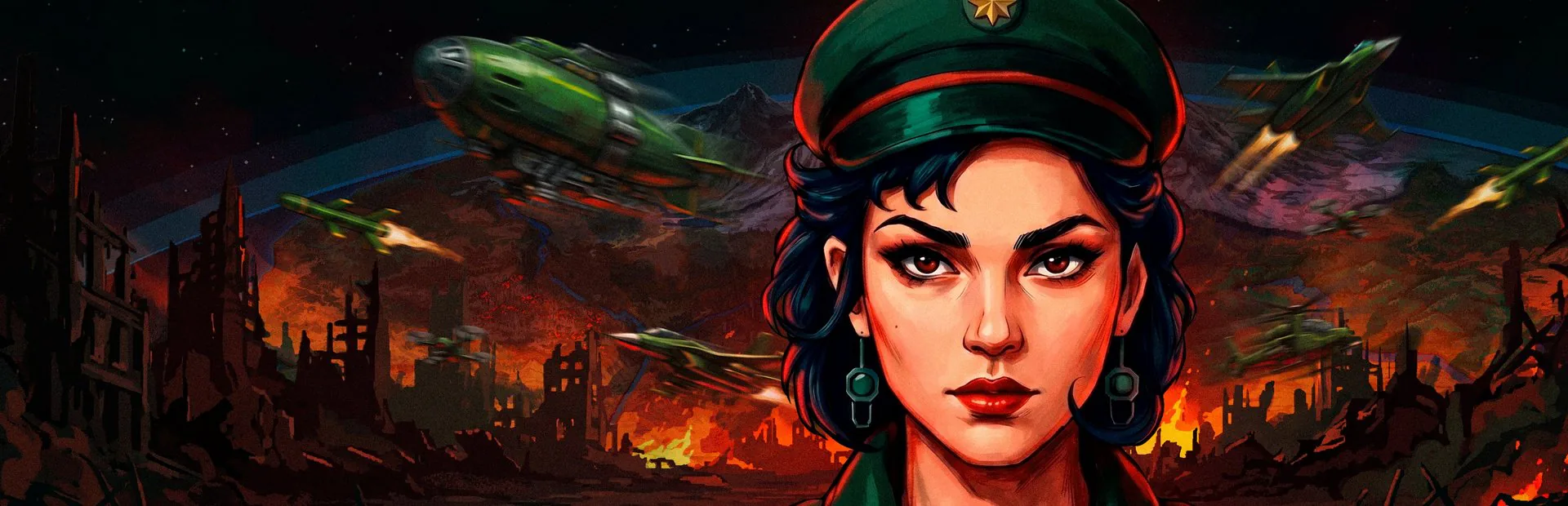
A post-apocalyptic war following a nuclear conflict in the early 21st century. The old states are gone, the world order has collapsed, but the war hasn't ended. On the ruins of civilisation two new alliances have risen - the Unbowed and the Flameborn - fighting a war of attrition.
The game leans on nostalgia for nineties strategy, the Command & Conquer / Red Alert feel, and on war and post-apocalyptic cinema: The Terminator, Apocalypse Now, Mad Max and films in that orbit.
SIMILAR GAMES
Tower defence
The overlap is in the defence missions, the waves of enemies, choosing how to defend and growing stronger over time. Nothing matches it directly.
Legion TD 2EmberwardRogue Tower
Autobattlers and strategy games without micromanagement
The player makes strategic decisions before and between engagements, and the units largely act on their own.
Dwarves: Glory, Death and LootMechabellumDespot’s Game
RTS and nostalgic strategy games
Military strategy, bases, attack, defence, armies, the spirit of classic RTS games, factions and a post-apocalyptic military aesthetic.
Command & ConquerRed Alert
Modern RTS
The same, minus the nostalgia.
Broken ArrowTempest Rising
Roguelike / roguelite strategy games
The emphasis is on an unusual genre paired with a roguelike structure: repeat runs, random sets of options, build-crafting, meta-progression and synergies.
FTL: Faster Than LightBrotatoVampire SurvivorsSlay the SpireAgainst the StormThe Last SpellLoop Hero
VISUAL STYLE
Post-apocalyptic military strategy with retro RTS nostalgia
Visually, the game should be sold through:
—A recognisable RTS picture: base, units, waves, attacks, defence
—Large war machines, mechs, tanks, turrets, infantry, explosions
—Post-apocalyptic dust, metal, fire, ruins
—A nostalgic retro aesthetic that doesn't feel dated
—The contrast between the toy-like readability of a strategy game and the harshness of the subject
—Readable on-screen chaos: many units, but clear fronts, attack lines and defence zones
The capsule and the trailer have to read first of all as a strategy game, not as generic post-apocalyptic action.
NARRATIVE
In the early 21st century an economic crisis leads to nuclear war between the major powers. The political order collapses, states disappear, but the war goes on. Out of the ashes of the old world two alliances are born: the Unbowed and the Flameborn.
The player goes through a non-linear campaign, making moral decisions in every mission. After mission six the story splits into three branches:
The VictorThe SurvivorThe Rebel
Each branch splits into two endings - six endings in total.
THE CENTRAL NARRATIVE QUESTIONS:
—What sacrifices are acceptable for victory?
—Can you stay human in a war?
—Where is the line between necessary brutality and a war crime?
—Which is worse: losing the war, or winning it at the cost of yourself?
—What does betrayal cost, if it saves people?
The narrative shouldn't be sold as “a strategy game with lots of text”. It should be sold as a campaign where winning doesn't always mean you chose right. It's worth playing on the nostalgic link to nineties culture and using retro lines like “War never changes”.
THE GAME'S STRENGTHS
12–15h
for a single playthrough
50–60h
for all the branches
—An unusual mix of RTS + roguelike + tower defence + autobattler.
—High replayability thanks to random units, upgrades, synergies, commander bonuses and the branching campaign.
—Nostalgia for nineties RTS, but with a modern roguelike structure.
—A low barrier to entry: units act on their own, there's less micromanagement, and it's easier to get started.
—60+ playable units and hundreds of synergistic upgrades.
—Two mission types: defending your base against waves, and attacking the enemy base.
—A non-linear campaign with moral choices (3 story branches and 6 endings).
—12-15 hours for a single playthrough, 50-60 hours for all the branches.
Communication
WHAT WE WANT TO SAY
—This is strategy with a nineties spirit.
—This is strategy for people who love RTS but don't have much time.
—This is strategy where every battle plays differently.
—You're not just building an army - you're crafting a build out of random units and synergies.
—RTS without heavy micromanagement: less fighting the interface, more strategic decisions.
—Your army acts almost on its own, but it wins or dies because of your decisions.
—Defend your base against waves of enemies, or destroy the enemy's fortifications.
—Unlock new units, permanent upgrades and new campaign branches.
—Winning the war doesn't make you right. Make your moral choices.
—Play through for every ending.
WHAT WE WANT TO SHOW
Core loop
Choose a hero and bonuses → start with a small army → place buildings and troops → battle → upgrade → synergy → a stronger army → the next mission changes the conditions (defence → attack) → between battles new units and upgrades unlock → your decisions lead to a different branch and ending.
The scale of the army
Many units on the field, turrets, front lines, a built-up defence, explosions, vehicles, infantry, helicopters, waves of enemies. The feeling that a small army has grown into a war machine.
Synergies and upgrades
A choice between several upgrades, visible synergistic pairings, a before-and-after: from a weak army to a powerful one after upgrades.
No micromanagement
The player isn't babysitting individual soldiers; the units fight on their own and the focus is on composition, direction and upgrades. The interface stays readable and doesn't scare anyone off.
Moral choice
A short story choice after a mission, consequences after mission six, different endings, and lines that underline the price of victory.
TONE OF COMMUNICATION
energeticstrategicmilitarypost-apocalyptic
With the military grandeur of nineties films (Apocalypse Now) and the irony aimed at it (Red Alert).
Don't sell the game as a heavy hardcore RTS - that narrows the audience. Better: “Strategy for people who love assembling powerful combinations and watching a well-built army grind the enemy down.”
TAGLINE OPTIONS
Build a new army in every battle.
No two battles are ever the same.
RTS depth. Roguelike replayability. No micro hell.
Defend your base. Destroy theirs.
Every upgrade changes the battlefield.
Win the war. Don't lose yourself.
THE STEAM PAGE
The main job
To explain the genre formula fast, not the lore: RTS + roguelike + tower defence, where the player builds an army out of random units and upgrades, goes through a non-linear campaign and makes moral decisions.
The problem
In 5-10 seconds the player has to understand this is a replayable strategy game with builds, synergies, a branching story and a retro spirit.
The capsule
It has to read as a strategy game with a roguelike setup: army / vehicles / base / front line, post-apocalyptic war, the scale of the battle, and one strong central object (a tank, a commander, a base). Don't crowd it with small units.
Screenshots
The starting army, a huge army after upgrades, a layered defence, waves of enemies, a base attack with an airstrike, the upgrade selection screen, unlocking units, a moral choice.
GIF assets
The army grows after an upgrade, a wave breaks against the defence, a base attack, choosing an upgrade → the effect, a before-and-after of a synergy, an ultimate combination, a moral choice with consequences.
POSITIONING RISKS
Risk 1. Players don't understand the genre
WHAT TO DORTS + roguelike + tower defence + autobattler can sound complicated. Use the short formula “RTS roguelike without micro hell”, show the loop visually, don't pile on terms, and explain the core loop with the first screen: “build army → fight → upgrade → choose → repeat”.
Risk 2. The RTS audience decides the game is dumbed down
WHAT TO DODon't say “a simplified RTS”, say “the depth has moved out of micro and into builds and synergies”. Show complex late-game builds and real tactical decision-making, and show that autonomous units don't take the strategy away.
Risk 3. The old demo left a dated impression
WHAT TO DOPosition the new demo as a major relaunch with a story campaign. Update the page, the trailer, the screenshots and the description. Say plainly in the announcement that the game has changed a lot.
CONTENT PILLARS FOR PROMOTION
1. “RTS without micro hell”
You make strategic decisions instead of babysitting every soldier. Units engage on their own, and the win is decided by your build, not your APM.
2. “Every battle, a new army”
The roguelike hook: a random set of units, a choice of upgrades, different builds - “this run I went tanks / artillery / drones / turrets”.
3. “Defence and attack”
Defence missions as wave/tower defence, attack missions as an RTS offensive. Alternating tempo.
4. “The price of victory”
The narrative hook: moral choices, consequences, the branch after mission six, three paths and six endings.
5. “C&C nostalgia, but not retro for retro's sake”
“The spirit of nineties RTS in a modern roguelike structure”: bases, vehicles, explosions, briefings, a military vibe - with modern upgrades, branching and meta-progression on top.